Book of the Day
Moby-Dick
Herman Melville · 1851
A whale really did sink a ship. What the survivors did afterwards is worse than anything in the novel.
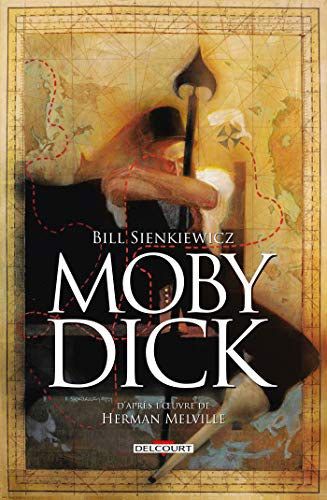
The ship that a whale sank
On 20 November 1820, the American whaleship Essex was working the Pacific roughly two thousand miles from land. There were twenty-one men aboard, under a captain named George Pollard Jr. who was making his first voyage in command.
A sperm whale rammed the ship. Then it turned and rammed it again.
This was not supposed to be possible. Whales were the hunted; the entire economics of the industry rested on that being reliably true. The Essex filled with water and went down, and the crew took to three small open boats in the middle of the largest ocean on earth.
What happened in the boats
They were at sea for around three months. Fewer than half of them were rescued.
The men who were picked up eventually described what the intervening weeks had involved: starvation, then the eating of those who had already died, and finally something worse.
In Pollard's boat, four men were still alive and none of them was yet dead. Rather than wait, they agreed to draw lots to decide which of them would be shot so the others could eat.
The lot fell to Owen Coffin — a young man who happened to be the captain's own cousin.
How Melville heard it
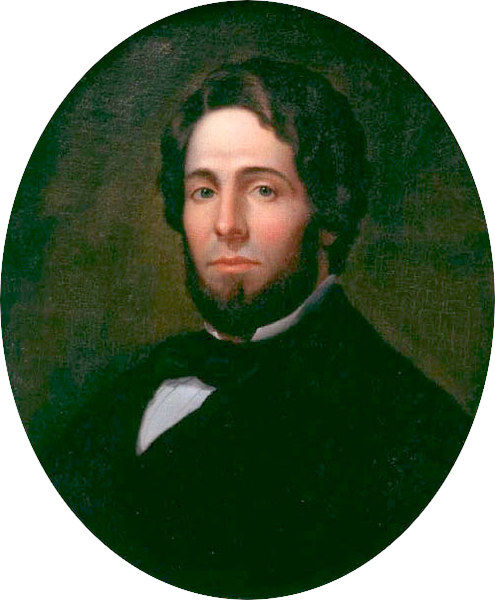
Herman Melville was a young whaler himself before he was a novelist, and on a voyage in the Pacific he met a man named William Henry Chase — the son of Owen Chase, who had been the Essex's first mate and had written an account of the disaster.
The son gave the curious young sailor a copy of his father's book. That is how the story reached Melville: not from a library, but handed over on a working whaleship by the son of a man who had lived through it.
Years later, in 1852, Melville visited Nantucket and met Captain Pollard himself, by then in his sixties.
The missing last page
Moby-Dick was published in London before it was published in America — and the British edition, from the publisher Richard Bentley, went out without its epilogue.
The epilogue is not decoration. It is the passage in which Ishmael explains how he alone survived the sinking of the Pequod and is therefore able to tell the story at all. Without it, a novel narrated in the first person ends with every character dead, narrator included.
The evidence suggests carelessness rather than censorship — the section appears simply to have been mislaid.
The reviewers noticed. The Dublin University Magazine asked how it happened that the narrator survived to tell the story. And American newspapers reprinted those scathing British notices instead of reviewing the book themselves — even though the American edition had the epilogue in it, and the objection did not apply.
What it earned him
Moby-Dick sold 3,715 copies in Melville's lifetime, and earned him $556.37 in the United States.
He went on to work for nineteen years as a customs inspector on the New York docks, and died without seeing the book become what it became.
Did you know
- The Essex was rammed twice by a sperm whale on 20 November 1820, about two thousand miles from land.
- The survivors drew lots; the lot fell on Owen Coffin, the captain's young cousin, who was shot for food.
- Melville learned the story from Owen Chase's son, who handed him a copy of his father's account at sea.
- The British first edition omitted the epilogue explaining how Ishmael survived — apparently by accident — and reviewers attacked the book for the resulting hole.
- It sold 3,715 copies in Melville's lifetime and earned him $556.37.
Is this book on a shelf near you?
BookHome is a neighbourhood book exchange. See who nearby has a copy to lend, swap or sell.