Book of the Day
Slaughterhouse-Five
Kurt Vonnegut · 1969
The title is not a metaphor. It is the address of the building he was locked in, and the reason he is alive.
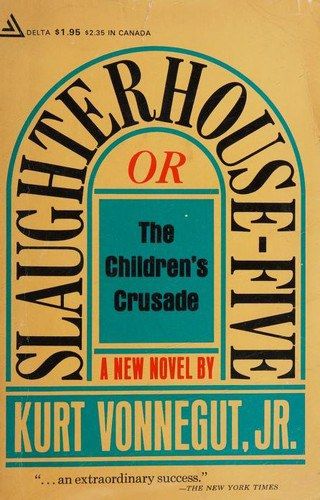
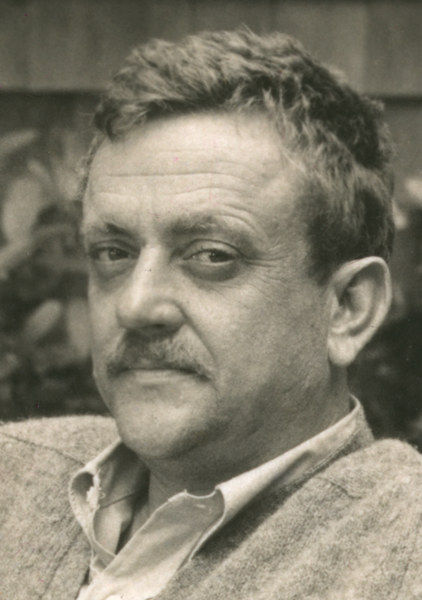
Schlachthof Fünf
In 1944 Kurt Vonnegut was captured by German forces and held as a prisoner of war. He and other prisoners were housed in Dresden, in a disused slaughterhouse that the guards referred to by its number: Schlachthof Fünf. Slaughterhouse Five.
In February 1945 Allied bombers firebombed the city.
Vonnegut survived because he was underground, in the building's meat locker — a cold store cut into the rock, built to keep carcasses from spoiling. It was not designed as a shelter. It worked as one.
He came up into a city that was no longer there.
Twenty-four years of not writing it
He tried to write about it almost immediately, and could not.
The problem was not memory. It was shape. There is no satisfying narrative arc to being locked in a cellar while a city burns above you; nothing in it builds, nothing resolves, and the survivor did nothing heroic except be underground.
The book was published in 1969 — around a quarter of a century after the night it describes. What he eventually found was a structure that refuses to move forwards: a man who has come "unstuck in time" and experiences his life out of order, so that the bombing is never approached and never left behind, only returned to.
The form is the argument. A straight line would have been a lie.
Awards and screen
Filmed in 1972 by George Roy Hill. It premiered at the Cannes Film Festival, where it won the Jury Prize and was nominated for the Palme d'Or, and went on to take the Hugo Award for Best Dramatic Presentation and the first ever Saturn Award for Best Science Fiction Film.
Vonnegut praised the adaptation for its faithfulness. Its score was played by the pianist Glenn Gould.
Did you know
- "Slaughterhouse-Five" was the actual name of the building — Schlachthof Fünf — where he was held prisoner.
- He survived the firebombing of Dresden inside its underground meat locker.
- The novel appeared in 1969, roughly twenty-four years after the event.
- The 1972 film's score was played by the pianist Glenn Gould.
- It won the Jury Prize at Cannes and the first Saturn Award ever given for science fiction.
Is this book on a shelf near you?
BookHome is a neighbourhood book exchange. See who nearby has a copy to lend, swap or sell.