Book of the Day
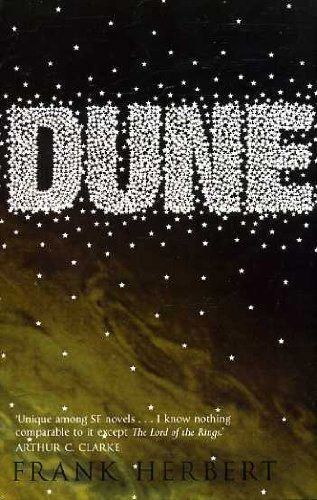
Dune
Frank Herbert · 1965
Twenty-three publishers turned it down. The one that finally said yes made car repair manuals.
An article that was never finished
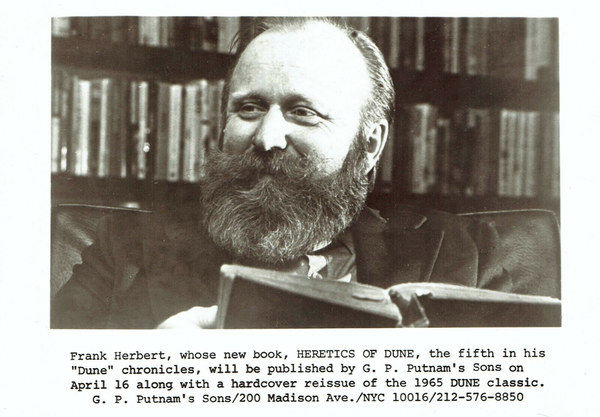
In 1957 a journalist named Frank Herbert flew to Florence, on the Oregon coast, to write a magazine piece about sand.
It was a real story. Enormous dunes were moving inland along that coastline, swallowing roads and threatening towns, and the US Department of Agriculture was trying to pin them in place by planting them with grasses that could hold the sand still. Herbert had a title ready: "They Stopped the Moving Sands."
He never finished it. The article got as far as a rough outline and stopped. What he could not stop was the thinking — sand that behaved like a slow liquid, and an entire landscape that could be engineered by people patient enough to work in generations rather than years.
That reading took six years, and at the end of it he had a novel about a desert planet where water is the only currency that matters.
Twenty-three refusals
The story first reached readers in pieces, serialised in the science fiction magazine Analog. But a magazine serial is not a book, and turning it into one meant finding a publisher willing to print something enormous, slow to start, and preoccupied with ecology at a time when that word did not sell.
Twenty-three publishers read it and said no.
It is worth sitting with that number. Not two or three houses passing on an unusual manuscript, but twenty-three separate professional judgements that this book would not find readers.
The company that made car manuals
The offer, when it came, came from an unlikely direction.
Sterling E. Lanier was an editor at Chilton Books — a publisher whose business was non-fiction, and whose best-known products were automotive repair manuals, the kind kept in a garage with oil on the cover. Lanier was also a science fiction writer himself, and a genuine admirer of the serial. Before it had even finished running, he went to Herbert's agent with an offer to publish the whole thing as a book.
Herbert's son Brian later recalled his father joking that Chilton might retitle it How to Repair Your Ornithopter.
Awards and screen
Dune won the very first Nebula Award for Best Novel, given by science fiction writers to one of their own. It then tied for the Hugo Award, voted by readers, sharing it with Roger Zelazny's This Immortal.
It has since sold more than twenty million copies and is generally described as the best-selling science fiction novel ever written.
Denis Villeneuve's adaptation arrived in 2021 and won six Academy Awards — cinematography, editing, original score, visual effects, production design and sound — tying Mad Max: Fury Road for the most wins by a modern science fiction film. Six Oscars, for a book twenty-three publishers did not want.
Did you know
- The novel began as an unfinished magazine article about sand dune stabilisation in Oregon, provisionally titled "They Stopped the Moving Sands".
- Twenty-three publishers rejected it before Chilton — a publisher of car repair manuals — said yes.
- The editor who took it, Sterling E. Lanier, made the offer before the magazine serial had even finished running.
- Herbert joked that Chilton might retitle it How to Repair Your Ornithopter.
- It won the first Nebula Award ever given, and the 2021 film won six Oscars.
Is this book on a shelf near you?
BookHome is a neighbourhood book exchange. See who nearby has a copy to lend, swap or sell.