Book of the Day
Doctor Zhivago
Boris Pasternak · 1957
Banned at home, smuggled out of the country in a stranger's coat, and secretly reprinted by the CIA to be handed to Soviet tourists at a world's fair.
A poet who wanted to write one novel
Pasternak was already among the most admired poets in the Soviet Union, and had survived a period when that admiration was dangerous. Stalin's purges took many of his contemporaries; the poet Osip Mandelstam died in a transit camp. Pasternak spent years translating Shakespeare and Goethe into Russian — respectable work that kept him employed and out of the way.
The novel he wanted to write took him roughly ten years. It followed a doctor and poet through the revolution and the civil war, and its offence was not that it attacked the Soviet state directly. It was subtler and worse: it treated the revolution as something that happened to people, rather than something they were fulfilled by. Its hero cares about love and poetry while history is being made around him, and is not punished by the author for it.
He submitted it to the literary journal Novy Mir in 1956. They rejected it.
"You are hereby invited to my execution"
That same year an Italian journalist named Sergio D'Angelo, working in Moscow and scouting for the publisher Giangiacomo Feltrinelli, visited Pasternak at his dacha. Pasternak handed him the manuscript. As D'Angelo left, Pasternak said: "You are hereby invited to my execution."
He was not being dramatic for effect. He had watched what happened to writers.
The Soviet authorities, realising what was in motion, pressured Pasternak to demand the manuscript back. He sent the telegram they wanted — and separately got word to Feltrinelli to ignore any letter from him written in Russian, and publish. Feltrinelli published it in Italian in November 1957.
The CIA's paperback
Here the story turns strange. The CIA understood something the Soviet censors also understood: a book banned at home carries a particular charge. An internal memo, among the documents released in 2014, put it plainly: "This book has great propaganda value" — not because it attacked the Soviet Union, but for the opportunity "to make Soviet citizens wonder what is wrong with their government, when a fine literary work by the man acknowledged to be the greatest living Russian writer is not even available in his own country in his own language for his own people to read."
That is the argument in full. A state that bans a novel is admitting something about itself, and the agency simply made sure the admission was visible.
So the agency had 1,000 copies of a Russian-language hardback printed at Mouton in The Hague in early September 1958, and arranged for 365 of them to be handed out at the Vatican pavilion of the Brussels World's Fair. Soviet citizens were permitted to visit the fair. Visitors reportedly tore off the covers and stuffed the pages into their pockets to get them home.
A miniature edition followed, small enough to be hidden in a coat. One of them is in the CIA's own museum.
The prize he was not allowed to take
In October 1958 Pasternak was awarded the Nobel Prize in Literature. He cabled Stockholm: "Immensely thankful, touched, proud, astonished, abashed."
Four days later, after a campaign in the Soviet press, threats of expulsion from the country, and expulsion from the Union of Soviet Writers, he sent a second cable declining it. He wrote to Khrushchev that leaving Russia would be equivalent to death. He was allowed to stay. He died less than two years later, in 1960.
His son Yevgeny finally accepted the medal on his behalf in Stockholm — in 1989.
On screen
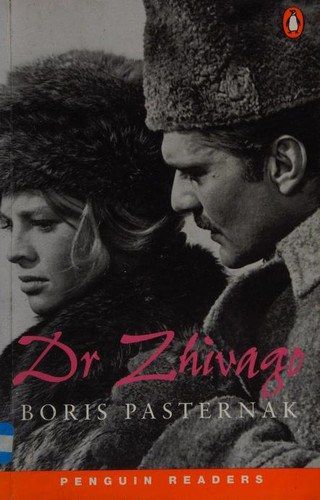
David Lean filmed it in 1965, with Omar Sharif and Julie Christie, shot largely in Spain and Finland because Russia was out of the question. Critics were lukewarm. Audiences were not: it won five Academy Awards, and adjusted for inflation it remains one of the highest-grossing films ever made. Maurice Jarre's "Lara's Theme" became inescapable for a decade.
Millions of people who would never read a Russian novel about the revolution absorbed it anyway, through a film the Soviet Union also banned.
Why it still matters
The novel was not published in the Soviet Union until 1988, thirty-one years after it appeared in Italy and twenty-eight years after its author's death. It arrived under glasnost, as one of the first proofs that the rules had genuinely changed.
Did you know
- "You are hereby invited to my execution" — what he said as he handed over the manuscript.
- He sent a telegram demanding the manuscript back, then got word out to publish anyway and ignore anything he wrote in Russian.
- The CIA printed 1,000 Russian-language copies at The Hague; 365 went to the Vatican pavilion in Brussels. ✓
- The operation was confirmed by declassified documents released in 2014. ✓
- He won the Nobel Prize and was forced to decline it within four days.
- His son accepted the medal twenty-nine years later.
- The novel was not published in Russia until 1988.
Is this book on a shelf near you?
BookHome is a neighbourhood book exchange. See who nearby has a copy to lend, swap or sell.