Book of the Day
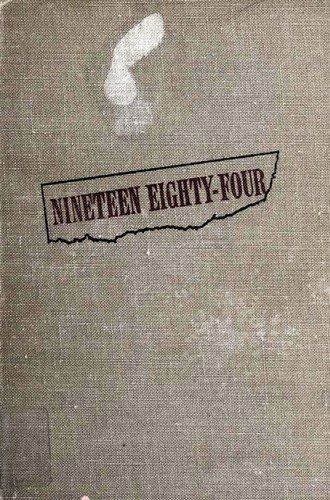
Nineteen Eighty-Four
George Orwell · 1949
No typist would travel to the island. So he propped himself up in bed, balanced the typewriter on a tea tray, and typed it himself while coughing up blood.
The house at the end of the road
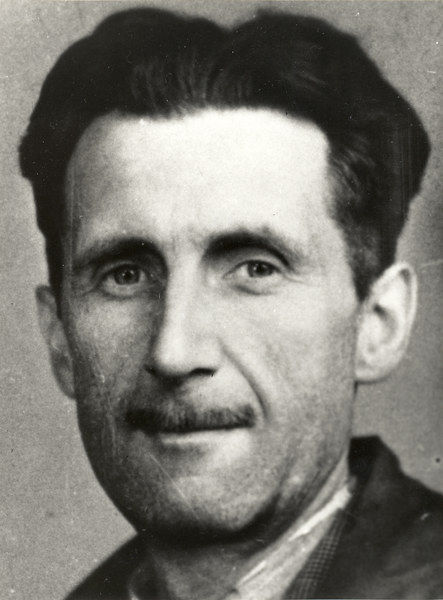
In 1946 Orwell moved to Barnhill, a farmhouse at the northern end of Jura, in the Inner Hebrides. It is difficult to reach now and was considerably harder then: a boat to the island, then miles of rough track, with no telephone and no electricity. He had just lost his wife suddenly during a routine operation, and was raising their adopted son alone.
He went there deliberately. London meant journalism, requests, interruptions — the constant small work of a well-known writer. Jura meant the book.
He was also already ill, in a way he had been ignoring for years. He had been coughing blood since his twenties.
Writing against his own lungs
The first draft was finished in late 1947, much of it typed in bed because he was too weak to sit at a desk. That Christmas he was admitted to a hospital outside Glasgow with tuberculosis and stayed there for more than six months. He was treated with streptomycin, then newly available and hard to obtain — and had a severe reaction to it.
He returned to Jura in July 1948, somewhat improved, and finished the rewrite by November. Then came the problem that produced the story people remember. The manuscript needed a clean typescript, and no typist could be persuaded to come to Barnhill. Getting one there and housed was more trouble than the work was worth.
So he did it himself. Too weak to sit up properly, he propped himself in bed with the typewriter balanced on a tea tray and typed the final manuscript of Nineteen Eighty-Four — around a hundred thousand words — at the end of 1948, seriously ill.
What it cost
He wrote to a friend that November saying he was so weak he could not pull up a weed.
The book was published on 8 June 1949. He was in a sanatorium by then. He died on 21 January 1950, of a haemorrhage of the lung, aged 46 — seven months after publication, and long before he could see what the book would become. Biographers have argued ever since about how much the effort of finishing it on that island cost him.
On screen, and one famous advertisement
There have been several adaptations — a 1954 BBC television version that caused questions in Parliament, and the 1984 film with John Hurt and Richard Burton, shot in the months the novel is set in.
But the strangest afterlife came in 1984 itself, when Apple ran a Super Bowl advertisement directed by Ridley Scott in which a woman hurls a hammer through a screen showing a Big Brother figure addressing rows of grey, identical workers. A computer company used Orwell's warning to sell a computer. It is now routinely called one of the most effective advertisements ever made, and it is hard to think of a neater demonstration of the book's own argument about language being turned inside out.
Why it still matters
The novel gave ordinary English a set of words it did not have: doublethink, thoughtcrime, newspeak, unperson, Big Brother, memory hole. "Orwellian" became an adjective within a generation.
The words are used carelessly now, often by people describing mild inconvenience. That is its own kind of proof. Orwell's actual subject was not surveillance cameras. It was what happens to a mind when the record of the past can be changed at will, and when the words available for thinking are deliberately reduced.
Did you know
- No typist would travel to Jura, so he typed the final manuscript himself, in bed, with the typewriter on a tea tray.
- He had tuberculosis throughout, and spent over six months in hospital in the middle of writing it.
- He wrote that he was too weak to pull up a weed in the month he finished.
- Seven months separated publication and his death.
- Apple's 1984 Super Bowl advertisement used his imagery to sell a personal computer.
Is this book on a shelf near you?
BookHome is a neighbourhood book exchange. See who nearby has a copy to lend, swap or sell.