Book of the Day
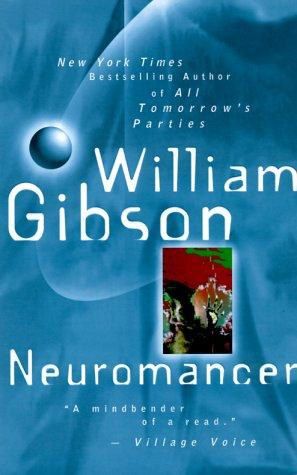
Neuromancer
William Gibson · 1984
He invented the internet's imagination on a manual typewriter built in the 1930s, having barely touched a computer in his life.

The machine
William Gibson wrote Neuromancer — the novel that gave the world the word "cyberspace" and the entire visual grammar of hacking, virtual reality and the networked future — on a Hermes 2000. A portable manual typewriter, olive green, dating from the 1930s. No screen, no memory, no delete key. Gibson said it looked like the kind of thing Hemingway would have used.
He was not writing from technical knowledge. He had very little. What he had was the sound of the word "cyberspace", which he had coined two years earlier in a short story called "Burning Chrome", and no clear idea yet of what it should mean.
The afternoon it nearly ended
About a third of the way into the manuscript, Gibson went to the cinema to see a new film called Blade Runner.
He lasted roughly twenty minutes.
What was on the screen looked, in his description, like the inside of his own head — the rain, the neon, the corporate towers, the crowded street level. He walked out. By his own account he figured the novel was sunk, done for, and that everyone would assume he had copied a film he had not yet seen.
He finished it anyway.
What it did to the language
Neuromancer did not predict the internet. It did something stranger: it supplied the words and the mental furniture that people would later use to describe the internet once it arrived.
"Cyberspace" came out of that book and into ordinary speech, then into law, then into government policy documents. A man with no computer wrote the imagery that a generation of engineers built towards.
Awards and screen
Neuromancer became the first novel ever to win all three of science fiction's major awards — the Nebula, the Hugo, and the Philip K. Dick Award for best paperback original.
It has been described as the genre's equivalent of taking the Booker, the Goncourt and the Pulitzer in a single year.
Did you know
- It was written on a 1930s manual typewriter by a man who had barely used a computer.
- Gibson coined "cyberspace" two years earlier, in a short story called "Burning Chrome" — he had the word before he had the idea.
- A third of the way through writing it, he walked out of Blade Runner after about twenty minutes, convinced his book was ruined.
- It is the only novel to have won the Hugo, the Nebula and the Philip K. Dick Award.
Is this book on a shelf near you?
BookHome is a neighbourhood book exchange. See who nearby has a copy to lend, swap or sell.