Book of the Day
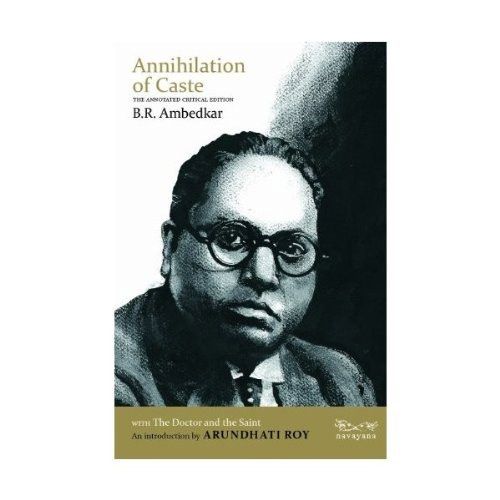
Annihilation of Caste
B.R. Ambedkar · 1936
They invited him to speak. They read what he had written. They cancelled the event rather than let him say it — so he paid to print it himself.
Before the invitation
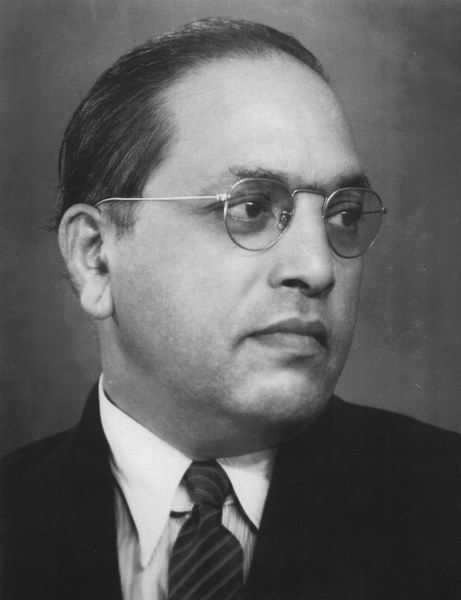
Bhimrao Ramji Ambedkar was born in 1891 into a Mahar family — untouchable, in the language of the time. At school he was permitted to attend and not to belong. He sat apart from the other children, on a piece of sacking he brought himself and carried home again, because the classroom floor could not be defiled. He was not allowed to touch the common water vessel. If no peon was available to pour water from a height into his hands, he went without. He wrote later, with no self-pity at all, "no peon, no water."
He then did something almost unimaginable for a person in that position in that period. He took a Master's and a doctorate at Columbia University in New York, a doctorate of science at the London School of Economics, and qualified as a barrister at Gray's Inn. He came back to India one of the most formally educated people in the country — and found that none of it changed how he was treated. Lawyers refused to share chambers. Employers found reasons. A man with a Columbia doctorate still could not drink from certain wells.
In 1927 he led thousands of people to a public tank at Mahad to drink water they were already legally entitled to drink. The tank was ritually purified after they left. At the same conference, he burned a copy of the Manusmriti in public.
The invitation
In a letter dated 12 December 1935, the secretary of the Jat-Pat Todak Mandal — an anti-caste Hindu reformist society based in Lahore — invited Ambedkar to speak on the caste system at their 1936 annual conference. They were reformers. They were on his side, as they understood it. They asked, as organisers do, to see the address in advance.
What he sent them was not what they were expecting.
What he actually wrote
Most reformers of the period argued that caste had become corrupted and could be cleaned up: remove the worst practices, encourage inter-dining, allow inter-marriage, and the system would soften into something harmless.
Ambedkar's argument was that this was a fantasy. Caste was not a social custom sitting loosely on top of Hinduism that could be lifted off. It was underwritten by scripture, sanctified by religious authority, and enforced by belief. You could not ask people to abandon a hierarchy while telling them the texts that established that hierarchy were sacred. The reformers were trying to keep the roof and remove the foundation.
And then he went further, and said the thing that ended the event. He announced that although he had been born a Hindu, he did not intend to die one.
The cancellation
The organisers wrote back. Would he consider removing that passage? Softening the attack on the scriptures? Making it something their members could sit through?
He refused to change a word. They cancelled the conference.
In late April 1936 the Mandal withdrew the invitation. On 15 May 1936 Ambedkar published the speech at his own expense — together with an introductory account of the entire controversy, so that readers could see exactly why they were reading it as a book rather than hearing it in a hall. It sold out. It went into further editions. Gandhi responded to it publicly in his journal Harijan, and Ambedkar published his reply to Gandhi alongside the original text in later editions, so that readers could see both arguments and decide for themselves — which is not what a man does if he is worried about losing.
What happened afterwards
He kept the promise. In October 1956, twenty years later, Ambedkar converted to Buddhism at Nagpur, alongside a crowd usually estimated in the hundreds of thousands. He died seven weeks later.
By then he had also chaired the drafting committee of the Constitution of India, and written untouchability out of the legal existence of the country he had been born unable to drink water in.
On screen, and back in print
Ambedkar's life was filmed in 2000 as Dr. Babasaheb Ambedkar, directed by Jabbar Patel, with Mammootty in the title role — a rare thing, a biographical film about a man whose entire argument was uncomfortable for the majority of its likely audience. It won the National Film Award for Best Feature Film on National Integration.
The book itself had a second life in 2014, when an annotated edition appeared with a long introduction by Arundhati Roy called "The Doctor and the Saint" — which set out the Ambedkar–Gandhi argument at length and started a public row of its own about who gets to introduce whom. The dispute did what disputes do: it sent a great many people to a 1936 text they had never read.
Why it still matters
Annihilation of Caste survives because it does something rare: it refuses the comfortable position. It does not ask for sympathy, it does not appeal to conscience, and it does not offer its opponents a way to agree cheaply. It is an argument, built to be answered.
It is also a reminder of something easy to forget — that the most consequential political text written in India that decade was one that a room full of self-described reformers decided they would rather not hear.
Did you know
- It was never delivered. Every printed copy exists because the invitation was withdrawn in late April 1936. ✓
- He published it on 15 May 1936, with an account of the controversy attached. ✓
- He published it himself, at his own cost, when no platform would host it.
- Gandhi replied in print, and Ambedkar published Gandhi's reply inside his own book, along with his response to it.
- He held doctorates from Columbia and the LSE and was a barrister of Gray's Inn.
- He chaired the drafting committee of the Indian Constitution — the document that made untouchability illegal.
- He converted to Buddhism in 1956, twenty years after promising in this book that he would not die a Hindu, and died seven weeks later.
Is this book on a shelf near you?
BookHome is a neighbourhood book exchange. See who nearby has a copy to lend, swap or sell.