Book of the Day
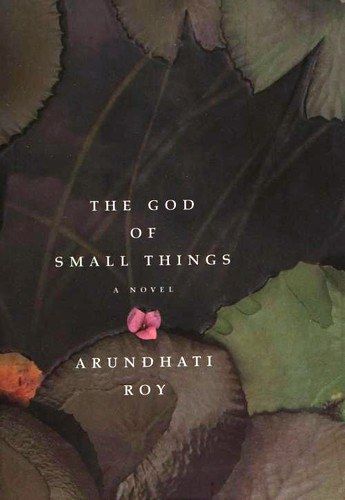
The God of Small Things
Arundhati Roy · 1997
She won the Booker with her first novel, then spent twenty years refusing to write a second one.
Not a writer, to begin with
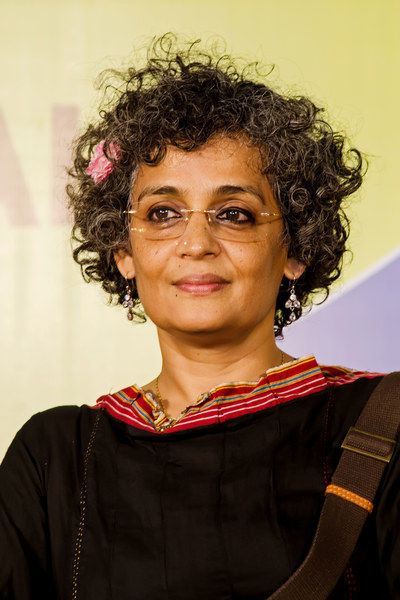
Roy trained as an architect at the School of Planning and Architecture in Delhi and, by her own account, had little interest in design. She wanted to write. She acted in a film, wrote screenplays, and by her own account lived for a while with very little money in a Delhi barsati.
She began the novel in 1992 and finished it in 1996, working on it without a publisher, a deadline, or any external reason to continue. Nobody was waiting for it.
Kerala, in fragments
The book is set in Ayemenem in Kerala and turns on two-egg twins, Rahel and Estha, and a single day whose consequences unfold across decades. It is told out of order, deliberately: the reader knows early what happens and spends the book learning why.
Its subject is what Roy calls the love laws — "who should be loved, and how, and how much" — and specifically what happens when someone crosses the line between castes. The prose invents its own rules, capitalises words for emphasis, repeats phrases like refrains, and reads like a child's understanding of adult catastrophe. That is the point: much of it is filtered through the twins, who see everything and understand some of it.
The prize, and the prosecution
It won the Booker Prize in 1997. The Booker's own library describes her as the first Indian winner of the prize, taking it with a debut novel nearly thirty years after the prize was founded.
It also brought a charge of obscenity. E.K. Nayanar, then Chief Minister of Kerala — the state the book is set in, and the state Roy is from — attacked its treatment of sexuality, and she was summoned home to answer the charge.
She also gave away the prize money.
The refusal
What she did next is the genuinely unusual part.
Having been handed the most valuable position in Indian letters — a young novelist with a global bestseller and an open door at any publisher on earth — she stopped writing fiction and spent two decades writing political essays. On the Narmada dams and the people displaced by them. On India's nuclear tests. On Kashmir. On Maoist insurgents in the forests of central India, whom she went and lived among.
The essays made her a great many enemies. She was briefly jailed for contempt of court in 2002 over her criticism of the Supreme Court. She has faced sedition allegations. Her position is not a comfortable one and she has never sought to make it comfortable.
Her second novel, The Ministry of Utmost Happiness, came out in 2017 — twenty years after the first.
Why it still matters
The God of Small Things did something structural for Indian writing in English: it proved a novel could be intensely local — Kerala, Syrian Christian, a specific river, a specific pickle factory — and be read everywhere without explaining itself to anyone.
There is no glossary. There are no apologetic footnotes for a Western reader. It simply assumes you will keep up.
Did you know
- She trained as an architect and came to fiction late.
- She wrote it over about four years with no publisher waiting.
- Booker Prize, 1997, with a debut novel — the Booker's own library calls her the first Indian winner. ✓
- She faced obscenity charges in Kerala, attacked by the state's then Chief Minister, E.K. Nayanar. ✓
- She gave away the prize money.
- Her second novel came twenty years after the first.
Is this book on a shelf near you?
BookHome is a neighbourhood book exchange. See who nearby has a copy to lend, swap or sell.