Book of the Day
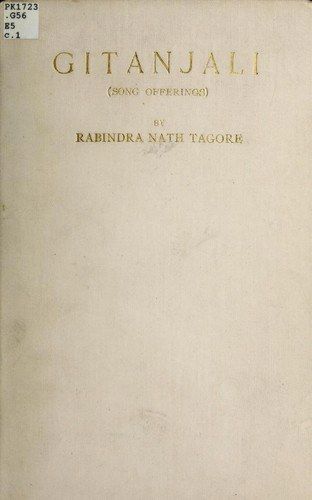
Gitanjali
Rabindranath Tagore · 1912
The manuscript that won Asia's first Nobel Prize spent a night in the lost property office of the London Underground.
Translating himself on a ship
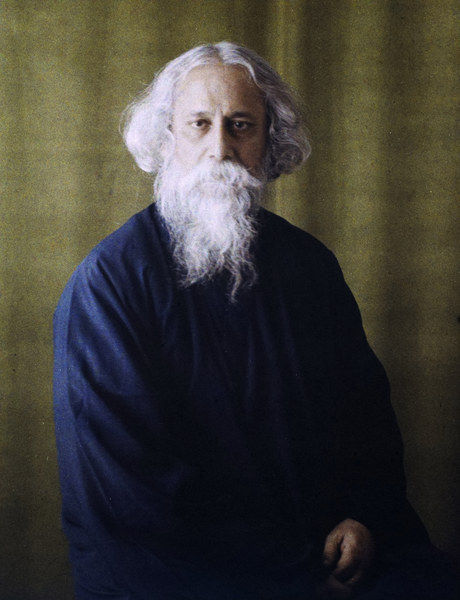
Tagore was, by 1912, the most celebrated writer in Bengal and almost unknown outside it. He was fifty-one, unwell, and had been advised to travel. On the voyage to England he began putting some of his own Bengali poems into English.
He was not doing it for publication. He described it as something to occupy a mind too tired for original work. He was translating himself into prose poems, in a language not his own, out of boredom and convalescence.
Lost on the Tube
The leather case holding those translations was in the keeping of Tagore's son, Rathindranath — and he left it on a train, getting off at Charing Cross.
It was recovered from the lost property office at Baker Street and returned. In his memoirs Rathindranath describes rushing there, and wonders afterwards how differently things might have gone had it never turned up. The only manuscript of the book that would open Indian literature to Europe spent a night in a railway lost property office because a young man got off a train without it.
Yeats carries it around
Tagore showed the pages to the painter William Rothenstein, who on 7 July 1912 arranged a private reading of them for a small circle of London literary figures, and passed them to W.B. Yeats. Yeats's reaction was extravagant and genuine. He wrote that he had carried the manuscript with him for days — reading it on trains, on buses, in restaurants — and had often had to close it so that strangers would not see how moved he was.
Yeats wrote the introduction. The India Society published a limited edition in London in 1912, and Macmillan followed.
In 1913, Tagore was awarded the Nobel Prize in Literature — the first non-European to receive it, an event so unexpected in Europe that some newspapers struggled to place him.
The knighthood he gave back
He was knighted in 1915. In April 1919 British troops under General Dyer fired on an unarmed crowd at Jallianwala Bagh in Amritsar, killing hundreds.
Tagore wrote to the Viceroy renouncing the knighthood. His letter refused the honour and asked to stand "by the side of my countrymen" in their humiliation. He was the most internationally celebrated Indian alive, and he handed the title back within weeks.
Why it still matters
Tagore wrote the words and music of what became India's national anthem, and the words of what became Bangladesh's — one man, the anthems of two countries.
He founded a school at Santiniketan built on the idea that children should be taught outdoors and not by rote, which became Visva-Bharati University. He wrote around two thousand songs; Rabindrasangeet is a living tradition, not a historical one.
And Gitanjali remains the moment when European literature was obliged to notice that the traffic might run in both directions.
Did you know
- He translated his own poems on a sea voyage, while unwell, to pass the time.
- His son Rathindranath left the case on a train at Charing Cross; it was recovered from lost property at Baker Street. ✓
- Yeats wrote the introduction and said he had to close the book in public to hide his reaction.
- First non-European Nobel laureate in Literature, 1913.
- He renounced his knighthood after Jallianwala Bagh in 1919.
- He wrote the national anthems of both India and Bangladesh.
Is this book on a shelf near you?
BookHome is a neighbourhood book exchange. See who nearby has a copy to lend, swap or sell.