Book of the Day
The Hitchhiker's Guide to the Galaxy
Douglas Adams · 1979
The idea arrived while he was lying drunk in a field in Austria, holding a copy of The Hitch-Hiker's Guide to Europe. Then he forgot about it for years. "I love deadlines. I love the whooshing noise they make as they go by."
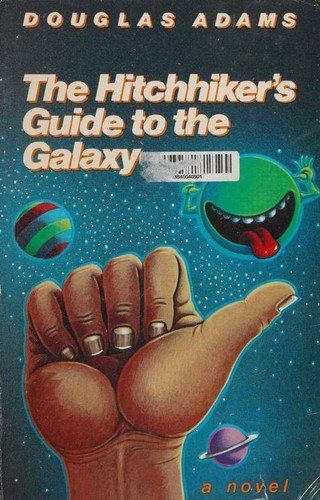
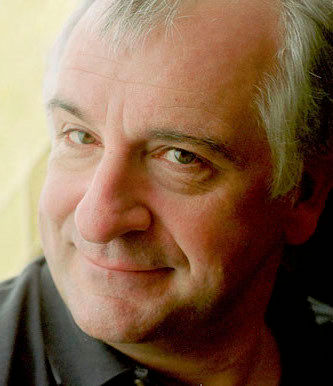
A field outside Innsbruck
Adams was nineteen, hitchhiking across Europe on almost no money, and had drunk enough one evening to end up flat on his back in a field outside Innsbruck. He was looking at the stars. Beside him was a battered copy of The Hitch-Hiker's Guide to Europe.
The thought that somebody ought to write a hitchhiker's guide to the galaxy occurred to him there. By his own repeated account, he then forgot about it completely for several years.
He told the story so often in later life that he admitted he could no longer tell whether he was remembering the event or remembering the telling of it — that he had reassembled the memory out of repetition and lost the original impression.
And there is a competing account. Friends have said he was talking about hitch-hiking around the galaxy on holiday in Greece in 1973, two years later and several hundred miles away.
Both belong in the story. The field near Innsbruck is the version Adams told; the Greek holiday is what his friends remember; and the man himself said his own memory of it could not be trusted. That is a better origin story than a tidy one.
Radio first
What came next was not a book. It was a BBC radio series, first broadcast in March 1978, made on a small budget with the BBC Radiophonic Workshop producing sound effects that had no business being that good.
It found an audience immediately, and the novel followed in 1979. The story then spread across formats with an inconsistency Adams cheerfully refused to resolve: radio series, novels, a stage show, a television series, a computer game, and eventually a film — with the plot differing between them, deliberately. He described the whole thing as a trilogy in five parts.
The deadlines
Adams's inability to finish anything on time is not an anecdote, it is a career-length feature, and he was funnier about it than anyone else could be:
> "I love deadlines. I love the whooshing noise they make as they go by."
For one novel his publisher gave up on encouragement and locked him in a hotel suite for three weeks with an editor sitting outside, on the understanding that he would not leave until there was a manuscript. There was a manuscript.
The joke that outlived him
The number 42 — the Answer to the Ultimate Question of Life, the Universe and Everything — became one of the most durable jokes in modern culture, embedded in software, search engines and physics lectures.
Adams was asked constantly why 42, and the answer disappointed everyone: it was not a code or a reference. He said he wanted an ordinary, unremarkable number, picked one, and that was that. The joke is precisely that there is no meaning, told to people who insisted on finding one.
He also gave English the word "Vogon", the concept of the Babel fish, and the two most useful words ever printed on a book cover: Don't Panic.
Why it still matters
Comic science fiction was, before this, largely a contradiction. Adams demonstrated that you could use the machinery of the genre — space travel, deep time, the scale of the universe — as the setup for jokes about bureaucracy, tea, and the awfulness of Thursdays, and lose nothing.
He died suddenly of a heart attack in 2001, at forty-nine, while at the gym in California.
Did you know
- Adams's own account: a field near Innsbruck in 1971, drunk, with a copy of The Hitch-hiker's Guide to Europe beside him. ✓
- He later said he had reassembled the memory from retelling it and lost the original. ✓
- His friends remember it differently — the idea coming up on holiday in Greece in 1973. ✓
- It was a BBC radio series in 1978, a year before the novel.
- "I love deadlines. I love the whooshing noise they make as they go by."
- He was once locked in a hotel suite for three weeks to finish a book.
- 42 means nothing. That is the joke.
Is this book on a shelf near you?
BookHome is a neighbourhood book exchange. See who nearby has a copy to lend, swap or sell.