Book of the Day
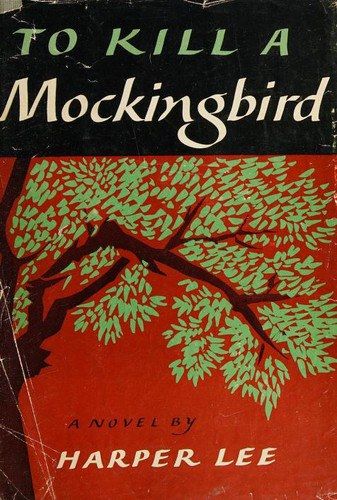
To Kill a Mockingbird
Harper Lee · 1960
Her friends gave her an envelope for Christmas. Inside was a year of her wages and a note: one year off, to write whatever she pleased.
The airline desk
Nelle Harper Lee left Alabama for New York in 1949 to write. What she actually did for most of the next decade was work as a reservations clerk, first for Eastern Air Lines and then for BOAC, booking other people's journeys and writing in whatever hours were left over.
She had studied law at the University of Alabama and dropped out before finishing. Her father was a small-town lawyer who had once defended two Black men accused of murder — both were convicted and hanged. She did not talk about that much. It is in the book.
The Christmas envelope
At Christmas 1956 her friends Michael Brown, a composer and lyricist, and his wife Joy, a former ballerina, handed her an envelope. Lee assumed it was money for presents.
Inside was a year of her salary, and a note:
> "You have one year off from your job to write whatever you please. Merry > Christmas."
They were not wealthy people. Michael Brown wrote industrial musicals for corporate clients and had just had an unusually good year, and they decided to spend it on their friend. She took it, gave up the airline desk, and wrote.
They then said nothing about it for fifty years. Neither Lee nor the Browns named the people involved, and the story stayed a rumour in literary circles until a 2006 biography and, finally, the Browns speaking on record for the 2012 documentary Hey, Boo.
Two and a half years of rewriting
The manuscript she produced was not the book that exists. Her editor at Lippincott, Tay Hohoff, thought there was something real in it and that it was not yet a novel — more a series of sketches, told by an adult woman looking back.
Hohoff pushed her to rewrite it from the child's point of view, and to keep rewriting. It took roughly two and a half years. Lee at one point, in frustration, threw the manuscript out of the window into the snow and had to telephone Hohoff before going outside to collect the pages.
The earlier version was not thrown away. It was published in 2015 as Go Set a Watchman, in circumstances that caused a great deal of argument about whether Lee, then elderly and in a care facility, had genuinely consented to it. Read as what it is — an early draft — it explains a great deal about how much work the finished novel took.
What it did
Published in July 1960, it won the Pulitzer Prize for Fiction in 1961 and has sold somewhere above forty million copies. It has been a fixture of school syllabuses for sixty years — and, at the same time, one of the most frequently challenged and banned books in American schools, for its language and its subject matter, sometimes by people offended by racism in it and sometimes by people offended by its treatment of racism.
On screen
The 1962 film gave Gregory Peck the role that defined him and won him the Academy Award for Best Actor. Lee and Peck became close friends; she gave him her father's pocket watch. The American Film Institute later named Atticus Finch the greatest hero in a century of American cinema.
Afterwards
She helped Truman Capote — her childhood next-door neighbour in Monroeville, and the model for Dill in the novel — research the Kansas murders that became In Cold Blood. Her contribution was substantial; the acknowledgement she received was not.
Then she stopped. She published no new novel for fifty-five years, gave almost no interviews, and went home to Alabama. She died in 2016.
Did you know
- The gift was a full year's wages, from friends who were not rich. ✓
- The note read: "You have one year off from your job to write whatever you please. Merry Christmas." ✓
- The Browns stayed anonymous for around fifty years. ✓
- Her editor made her rewrite it from the child's point of view over roughly two and a half years.
- She once threw the manuscript into the snow out of a window.
- Truman Capote was her childhood neighbour and the model for Dill.
- It is both a school set text and one of the most frequently banned books in America.
Is this book on a shelf near you?
BookHome is a neighbourhood book exchange. See who nearby has a copy to lend, swap or sell.