Book of the Day
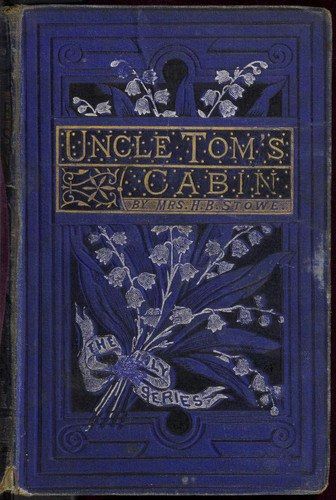
Uncle Tom's Cabin
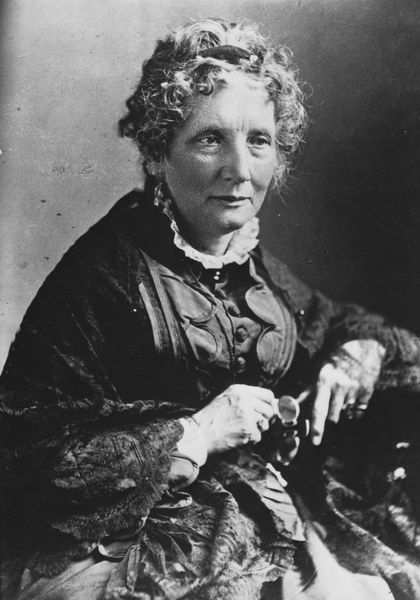
Harriet Beecher Stowe · 1852
The best-selling novel of the nineteenth century was written by a mother of seven at a kitchen table — and its title character's name became an insult.
A law, and a dead child
In 1850 the United States passed the Fugitive Slave Act, which required citizens of free states to assist in returning escaped enslaved people to their owners, and penalised those who helped them. It made every Northerner who had comfortably opposed slavery in principle into a participant.
Stowe was living in Maine, the daughter and wife of clergymen, with a large family and very little money. Two years earlier she had lost her eighteen-month-old son Samuel to cholera. She later said plainly that it was that death which taught her what an enslaved mother felt when her child was sold away from her — that she had learned it in the only way anyone truly learns anything.
She had also lived for years in Cincinnati, across the river from slaveholding Kentucky, and had met people who had escaped.
Serialised, then a book
She began writing in 1851 for The National Era, an anti-slavery weekly, expecting a few instalments. It ran for around ten months. When it appeared as a book in 1852 it sold 10,000 copies in a week and around 300,000 in the United States within the year — figures that were, for the period, without precedent.
It also sold enormously in Britain, where Stowe received nothing, there being no international copyright agreement.
The famous quotation nobody can source
The story everyone tells is that Lincoln, meeting Stowe in 1862, said: "So you're the little woman who wrote the book that started this great war."
There is no contemporary record of it. Stowe did meet Lincoln in Washington in November 1862, but the line itself surfaces decades afterwards, reported by her son. Historians have gone looking and found nothing behind it — the definitive account is Daniel R. Vollaro's paper "Lincoln, Stowe, and the 'Little Woman/Great War' Story: The Making, and Breaking, of a Great American Anecdote" in the Journal of the Abraham Lincoln Association (2009), which traces how it was built.
It should not be used — which is a pity, because it is a good line, and precisely the kind of thing that gets a story shared. That is the whole argument for checking.
The stage shows, and the slur
Stowe had no control over dramatisation. Within a few years, hundreds of unlicensed stage versions — "Tom shows" — were touring America, and many inverted the book entirely: sentimental, comic, played by white actors in blackface, some of them openly pro-slavery in sympathy.
Those shows, more than the novel, are how the character entered popular culture. Over the following century "Uncle Tom" became a term of contempt for a Black person seen as servile toward white people.
It is worth being exact about this. The Tom of the novel is a man who is beaten to death because he refuses to tell his master where two escaped women have gone. The insult describes the stage caricature, not the character Stowe wrote — an extraordinarily complete theft of a book's meaning.
Why it still matters
Whatever its faults, and they are real and much argued over, Uncle Tom's Cabin demonstrated something that had not been demonstrated before: that a novel could take an abstract political position and make an enormous number of people feel it personally, in a matter of months.
Every campaigning book since — The Jungle, Silent Spring — is working the seam she opened.
Did you know
- She began writing in response to the Fugitive Slave Act of 1850.
- She said the death of her infant son taught her what enslaved mothers endured.
- It sold around 300,000 copies in the US in its first year.
- She earned nothing from British sales — no international copyright existed.
- The famous Lincoln quotation is apocryphal — no contemporary record, first reported by her son decades later. ✓
- "Uncle Tom" as an insult derives from the stage shows, not from Stowe's character, who dies rather than betray two escaping women.
Is this book on a shelf near you?
BookHome is a neighbourhood book exchange. See who nearby has a copy to lend, swap or sell.